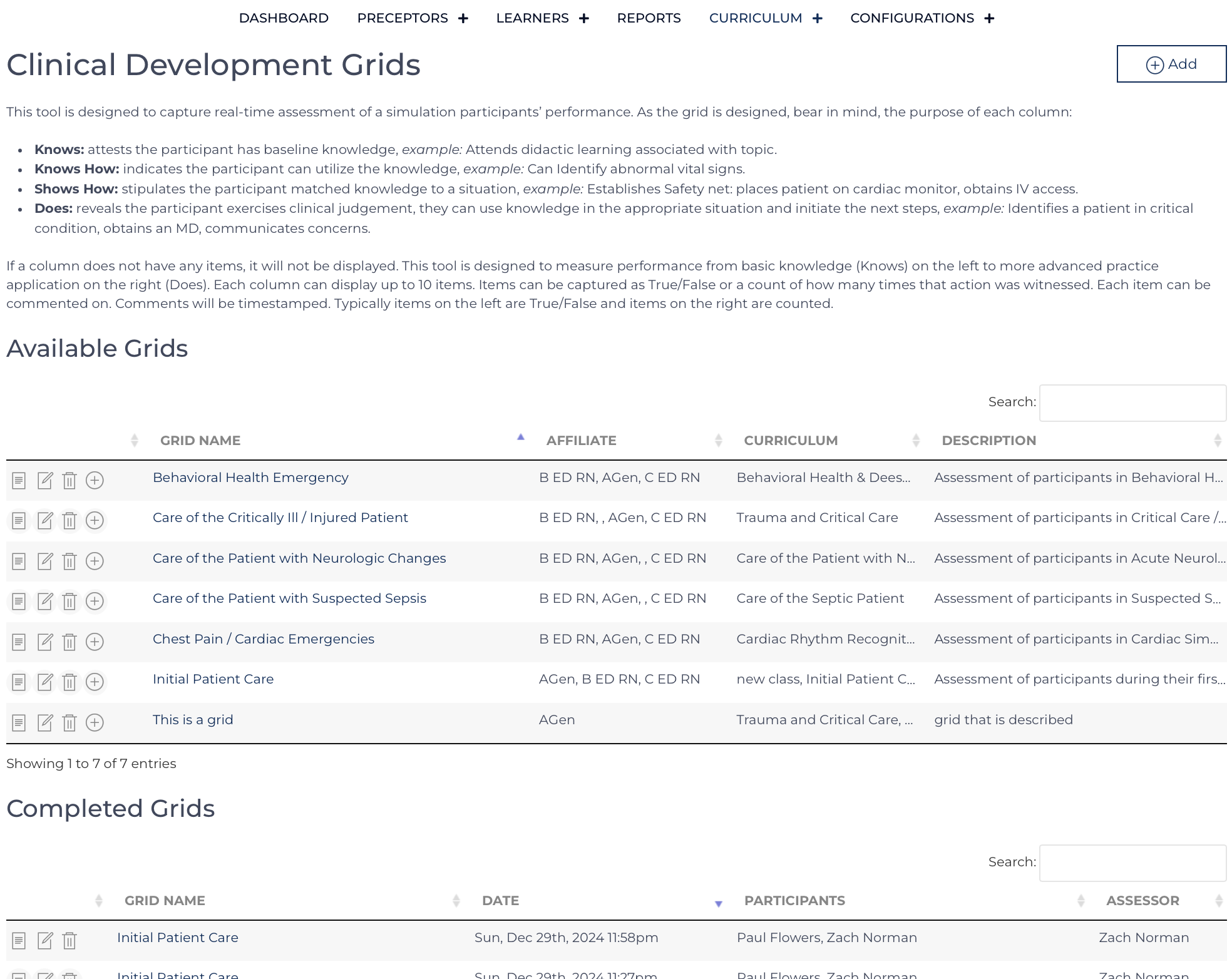
The Curriculum section acts as the architectural plan for all learning. It captures each recurring learning event—whether a single session or a multi-day course—and logs essential details, such as topics, objectives, outcomes, and event descriptions. The Learning Center has tools to schedule learning, but it also automatically generates a transcript of completed events for both learners and preceptors. By treating courses as measurable events—timestamps of instruction that integrate into a learner’s journey—educators can later analyze how course participation influences performance and patient outcomes over time.
This structured record becomes the backbone of long-term impact measurement: by knowing exactly what was taught when, educators can later correlate curriculum delivery with patient outcomes to quantify the program’s ROI.
Outcomes: Tracking What Truly Matters
The tool enables educators to:
- Measure patient outcomes associated with specific learning events.
- Compare learner progress against workload pressures, such as staffing or overcrowding indices.
- Generate dashboards and analytics that link training episodes with actual performance and care delivery.
These insights allow educators to document how training translates into improved care, providing a tangible ROI narrative to leadership.
Connecting the Dots to Patient Impact & ROI
By weaving together curriculum tracking, course participation, and outcome measurement, educators can compose a compelling, data-driven story:
- Plan: Develop a curriculum with clear objectives.
- Deliver: Execute courses and learning events.
- Track: Record each delivery and learner progress.
- Analyze: Link training timestamps with patient outcomes over time.
- Report: Show leadership how investments in training translate into better care—highlighting ROI.
Spotting When Refresher Training Is Needed
A critical long-term insight arises when outcomes begin to decline. If patient outcomes—or learner performance vs. workload—start slipping relative to when training occurred, that’s your trigger for renewing learning events or refreshing the curriculum.
In other words, the system helps educators not just document success, but also anticipate when recurrent training is necessary to maintain high standards in care and reinforce the value of continual investment.